SHIP RESISTANCE ANALYSIS WATERJET REMOTELY OPERATED VEHICLE (ROV) USING COMPUTATIONAL FLUID DYNAMICS (CFD) METHOD
DOI:
https://doi.org/10.30649/ijmea.v2i1.381Keywords:
Resistance, waterJet, propulsion system, thrustAbstract
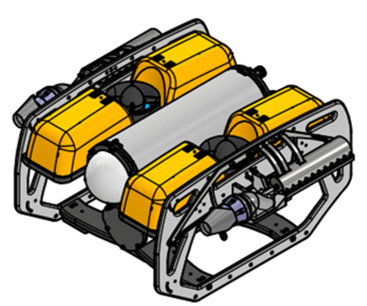
The propulsion system is a system that supports the performance of high-speed ships. Waterjet ship propulsion systems have long been known and used as propulsion systems for various types of ships, but their widespread application is still subject to their relatively low propulsive efficiency when compared to ship propulsion systems that use propellers, especially during relatively low ship speeds. The usual problem with ROVs using conventional propellers when inspecting in low water in the river is the blockage of river impurities, such as water hyacinths and underwater roots, on the ROV propellers. But there is a limitation to the problem when this waterjet is installed on the ROV should be used on inspections that do not work on the seabed, and the ROV can only be in a hovering position because the waterjet is susceptible to dirt. The purpose of this study was to analyze the ship's resistance of the waterjet remotely operated vehicle (ROV) propulsion system with the results of simulating the effect of the Waterjet ROV design on the total resistance of the Waterjet ROV increased by 5.69 N using the CFD method and the difference in prisoner comparison using the maxsurf method was 1.75%. The thrust analysis of the ROV model with a waterjet propulsion system has a higher thrust increase of 9.21 N when compared to the ROV model with a conventional propeller propulsion system, with a thrust value of 6.94 N. From the analysis of the fluid velocity contour results of the two best ROV models, namely the Waterjet ROV because the placement of the waterjet position on the outer side of the ROV frame so that the placement of the original Propeller inside the inner frame of the ROV is released as a result it tends not to create more turbulence and friction in the water in the middle of the ROV but the surface of the ROV frame on the outside which is added waterjet propulsion components causes higher hydrodynamic pressure.
Downloads
References
Adietya, B. A., Utama, I. K. A. P., Aryawan, W. D., Nasir, M., Nurcholis, Indiaryanto, M., Asrowibowo, N., Permana, R. D., & Nurhadi. (2023). Numerical and Experimental Investigations into the Characteristics of Wageningen B4-70 Series of Propeller with Boss Cap Fins. CFD Letters, 15(10), 152–169. https://doi.org/10.37934/cfdl.15.10.152169
Endri, B. (2015). Kajian Penggunaan Sistem Propulsi Water Jet Pada Kapal Surfer 2612. POLITEKNIK ILMU PELAYARAN SEMARANG.
Habu, Y., Sardju, A. P., Hamsir, I., & Wahab, A. (2018). Pada ROV (Remotely Operated Vehicles). PROtek : Jurnal Ilmiah Teknik Elektro, 05(1), 13–17
Manik, H. M., Fajaryanti, R., Siahaan, B. O., Sanubari, M., Syakti, A. D., Jaya, J. V., Apdillah, D., Solikin, S., & Dwinovantyo, A. (2017). Autonomous Underwater Vehicle untuk Survei dan Pemantauan Laut. Jurnal Rekayasa Elektrika, 13(1), 27. https://doi.org/10.17529/jre.v13i1.5964
Obreja, D., & Domnisoru, L. (2011). Theoretical and experimental investigation on the total resistance of an underwater ROV remotely operating vehicle (Vol. 1). Genoa.
Radhwan, H., Khalil, A. N. M., & Hamzas, M. F. M. A. (2014). International Review of Mechanical Engineering. International Review of Mechanical Engineering, 8(6), 1057–1061.
Rahmad, I. F., Doni, R., & Ekadiansyah, E. (2022). Perancangan Alat Bantu Survey Kualitas Air Kolam Renang Menggunakan Robot Remotely Operated Vehicle (ROV). Journal of Scientech Research and Development, 4(1), 96–105. http://idm.or.id/JSCR
Sørensen, F. F., von Benzon, M., Liniger, J., & Pedersen, S. (2022). A Quantitative Parametric Study on Output Time Delays for Autonomous Underwater Cleaning Operations. Journal of Marine Science and Engineering, 10(6). https://doi.org/10.3390/jmse10060815
Sudut, V., Pada, R., Offshore, K., & Vessel, S. (n.d.). Zona laut. 4(3), 309–318.
Susanto, T., Mardiyanto, R., & Purwanto, D. (2018). Development of Underwater Object Detection Method Base on Color Feature. 2018 International Conference on Computer Engineering, Network and Intelligent Multimedia, CENIM 2018 - Proceeding, 254–259. https://doi.org/10.1109/CENIM.2018.8711290
Susianti, E., Syahputra, N. A., Wibowo, A. U., & Maria, P. S. (2021). Rancang Bangun Robot Observasi Bawah Air - ROV (Remotely Operated Vihicle) Menggunakan Arduino UNO. Jurnal Elektro Dan Mesin Terapan, Vol. 7 No. 2 (2021), 126–136. https://doi.org/10.35143/elementer.v7i2.5207
Winarno, Arif. Sugianto, E. (2017). Computational model tahanan kapal untuk menentukan kebutuhan daya kapal bulk carrier 8664 DWT.
Winarno, A., Ciptadi, G., Iriany, A., & Widodo, A. S. (2023). Experiment Study of the Resistance on Nusantara Ship Hull Modification with Fishing Boat in Pantura East Java. International Journal on Engineering Applications, 11(2), 111–120. https://doi.org/10.15866/irea.v11i2.23505
Downloads
Published
How to Cite
Issue
Section
License
Copyright (c) 2025 International Journal of Marine Engineering and Applications

This work is licensed under a Creative Commons Attribution-NonCommercial-ShareAlike 4.0 International License.